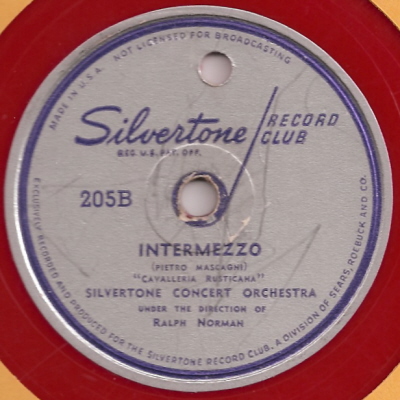
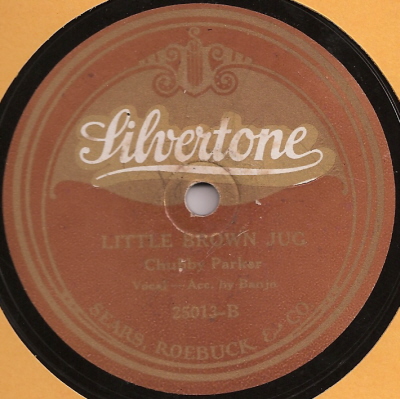
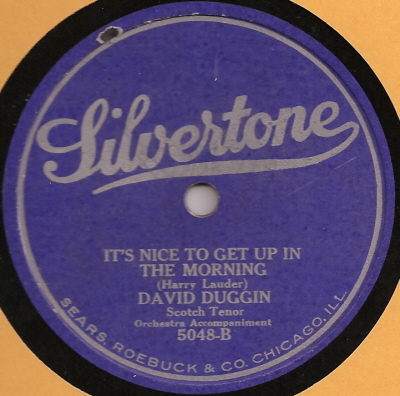
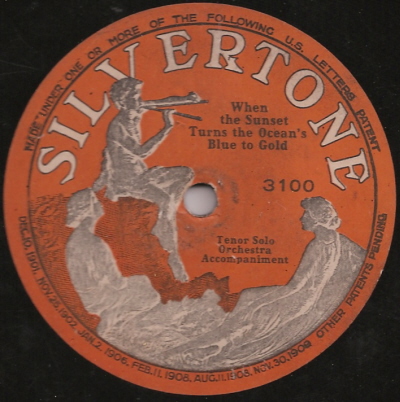
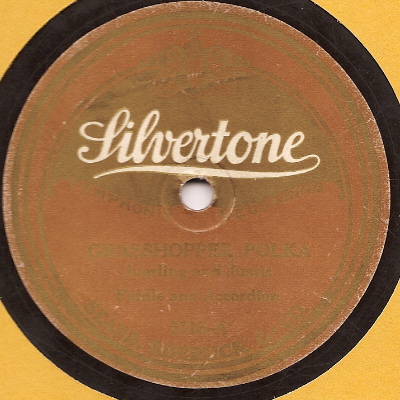
Silvertone. 1916-1928. Revived shortly in early 1940's and again briefly around 1950. The label was produced for Sears, Roebuck & Company. Originally as a single sided record to replace the Oxford label and produced by Columbia. Later, double sided labels were produced by numerous manufacturers. Below are 4 varieties that I own. Far left is the single sided label from 1916-17 produced by Columbia. Next is the blue label from about 1920, produced by Federal and is double sided. The tan label is the more popular one through the 20s and could have been produced by a wide variety of manufacturers depending on catalog number. The second, although impossible to see with this scan, adds "Truphonic Recording" under the name. The final example is the vinylite 1950 Silvertone Record Club produced by Mercury.
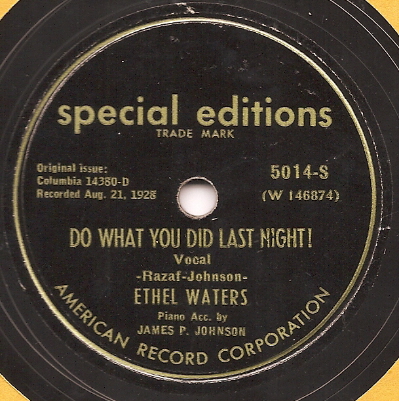
Special Editions. This is a re-issue label used by CBS (Columbia) in 1947. The series consists of 16 records. Interesting there is no mention of Columbia on the disc and they use American Record Corporation instead, which is a name that was long out of use. In this particular case it's a re-issue of 2 Ethel Waters' songs from 1928 on Columbia.
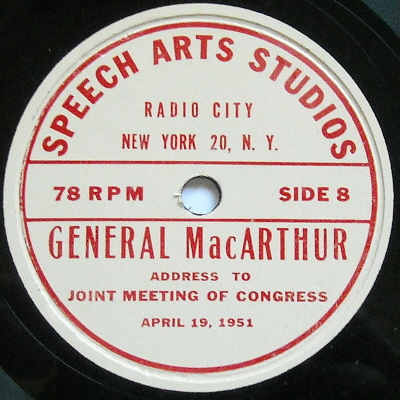
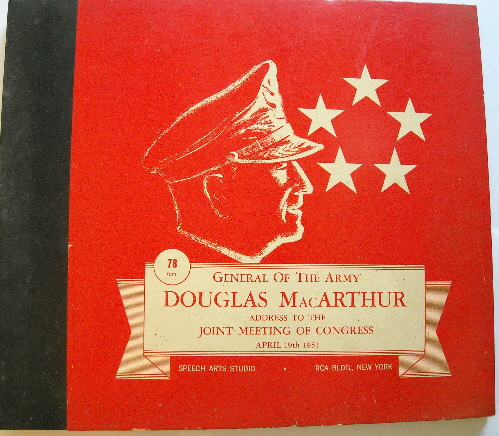
Speech Arts Studios. This is a 4 - 12" record set of the speech by General Douglas MacArthur to the Joint Meeting of Congress on April 19, 1951. Pictured is also the album cover.